
‘Night Watch’ — Pulitzer Prize-Winning Novel by Jayne Anne Phillips

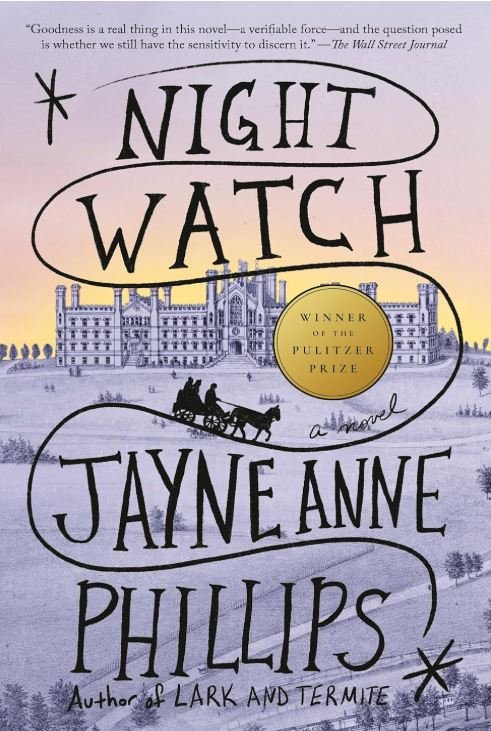
“Night Watch” by Jayne Anne Phillips is a compelling work of historical fiction that offers a deep, often harrowing, look at the aftermath of the American Civil War, primarily set in West Virginia. The novel won the 2024 Pulitzer Prize for Fiction.
Key Themes and Setting
• The Asylum: A significant portion of the novel is set in the real-life Trans-Allegheny Lunatic Asylum (now the Trans-Allegheny Lunatic Asylum) in Weston, West Virginia, around 1874. This setting is pivotal, as the institution, guided by the humane “moral treatment” philosophy of Dr. Thomas Story Kirkbride, provides a surprising sanctuary and a space for healing amidst a ravaged world.
• Civil War Trauma: The book unflinchingly explores the devastating and lasting effects of the war on individuals and families—both veterans suffering from physical and psychological wounds (amnesia, disfigurement) and civilians dealing with sexual abuse, loss, and mental collapse.
• Identity and Erasure: Characters often grapple with lost, hidden, or assumed identities, reflecting the chaos and dislocation of the era. The intertwining backstories reveal complex lineages and the shifting nature of self.
The Story
The core of the story revolves around ConaLee, a young girl, and her traumatized, largely mute mother, Eliza. They are delivered to the asylum’s door by a cruel veteran, known only as “Papa,” who has tormented their lives for years following the disappearance of ConaLee’s father during the war.
Inside the asylum, they meet a cast of vivid characters, including:
• O’Shea, the enigmatic night watchman with amnesia.
• Weed, an orphaned boy who assists O’Shea.
• Dr. Story, who champions the asylum’s compassionate treatment.
Interspersed with the present-day events at the asylum are flashbacks that slowly reveal the characters’ interconnected pasts, including the story of ConaLee’s father and the Irish healer Dearbhla, who sets out on a quest to find him.
Critical Reception
“Night Watch” has garnered a mix of strong praise and some criticism:
• Praise: Reviewers widely commend Phillips’s “gorgeous prose,” “haunting storytelling,” and the vivid, sensory detail used to bring the historical period to life. The novel is praised for shedding light on the surprisingly enlightened mental health care practices of the time and for its profound exploration of human suffering and resilience. Many found the characters, though often damaged, to be deeply compelling.
• Critique: Some critics and readers found the plot to rely too heavily on coincidence and melodrama (e.g., amnesia, secret identities). The narrative style, which sometimes jumps in time and occasionally forgoes quotation marks to delineate dialogue, was described by some as “vague and dreamy” or “sludgy” and demanding significant concentration.
Conclusion: “Night Watch” is an emotionally demanding and richly textured novel. It is recommended for readers who appreciate lyrical, character-driven historical fiction that tackles the dark realities of war and trauma while finding glimmers of hope and healing in unexpected places. Be prepared for a challenging read that rewards patience with a masterful and intricately woven narrative.