
How Do We Get It? – Radon

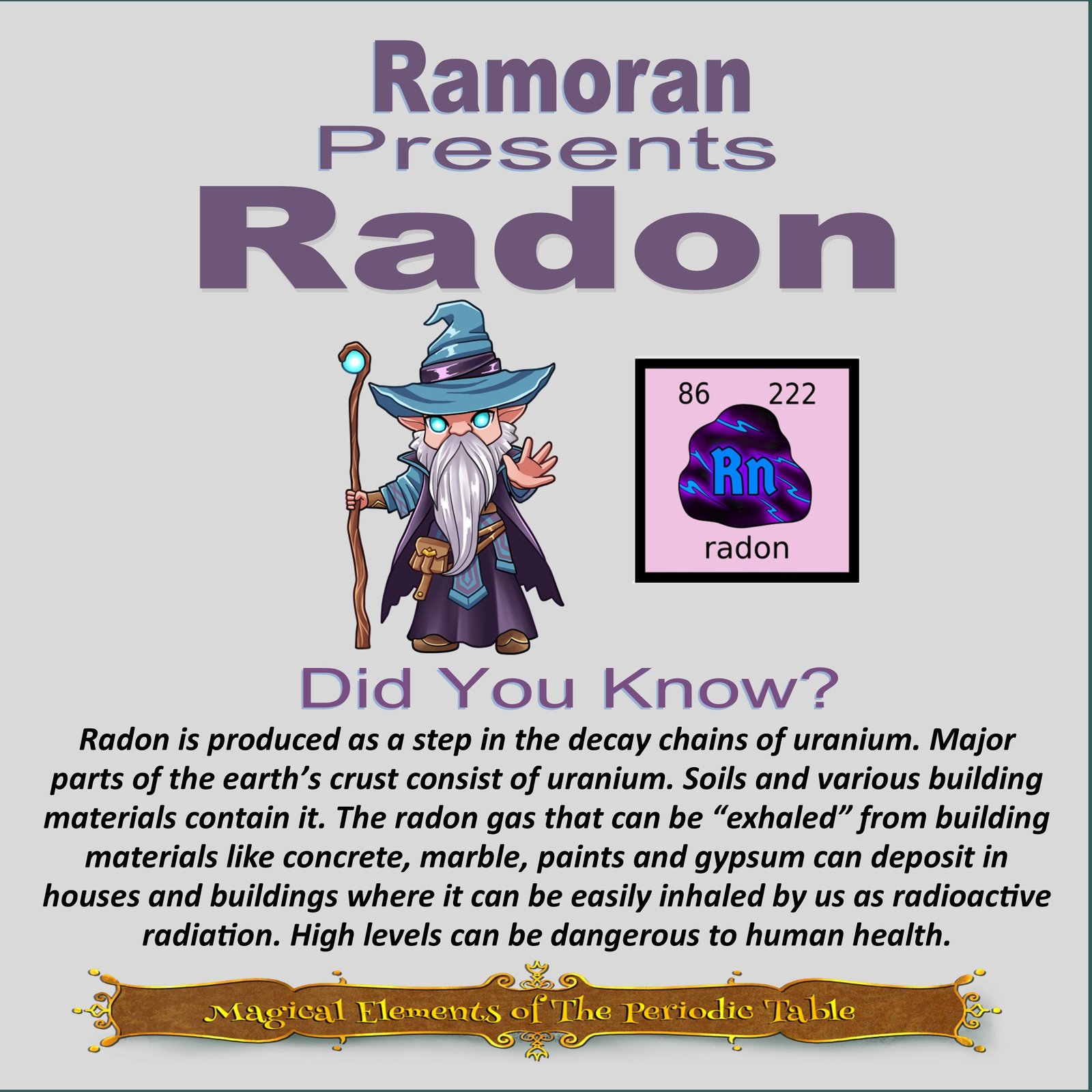
Radon: The Mysterious Element Below Our Feet
Have you ever looked at the periodic table and wondered about the strange elements it contains? One such element is radon (Rn), a gas that is not only fascinating but also has its own unique story. In this article, we’ll explore how radon is formed, its properties, and why it’s something worth knowing about, especially for teens interested in science!
Radon is a colorless and odorless gas that belongs to a group of elements called noble gases. Found in group 18 of the periodic table, radon is the heaviest noble gas and is famous for being radioactive. But what exactly does that mean? Simply put, it means that radon atoms are unstable and can break down to form other elements, releasing radiation in the process.
So, how do we actually get radon? The story begins deep within the Earth’s crust. Radon is a product of the radioactive decay of uranium and thorium, which are naturally occurring elements found in soil, rock, and sometimes even in the water supply. When uranium-238, one of the most common isotopes of uranium, decays, it goes through a series of transformations, ultimately resulting in radon-222. This transformation is a natural process that occurs over a very long time.
Once radon is produced underground, it begins to migrate. Since it’s a gas, it can easily travel through tiny spaces in soil and rock. As radon escapes from the ground, it can enter the atmosphere. However, it often doesn’t just float away into the air right away. Instead, radon can accumulate in various places, especially in buildings and homes, particularly in basements and lower levels where it can become trapped.
Have you ever looked at the periodic table and wondered about the strange elements it contains? One such element is radon (Rn), a gas that is not only fascinating but also has its own unique story. In this article, we’ll explore how radon is formed, its properties, and why it’s something worth knowing about, especially for teens interested in science!
Radon is a colorless and odorless gas that belongs to a group of elements called noble gases. Found in group 18 of the periodic table, radon is the heaviest noble gas and is famous for being radioactive. But what exactly does that mean? Simply put, it means that radon atoms are unstable and can break down to form other elements, releasing radiation in the process.
So, how do we actually get radon? The story begins deep within the Earth’s crust. Radon is a product of the radioactive decay of uranium and thorium, which are naturally occurring elements found in soil, rock, and sometimes even in the water supply. When uranium-238, one of the most common isotopes of uranium, decays, it goes through a series of transformations, ultimately resulting in radon-222. This transformation is a natural process that occurs over a very long time.
Once radon is produced underground, it begins to migrate. Since it’s a gas, it can easily travel through tiny spaces in soil and rock. As radon escapes from the ground, it can enter the atmosphere. However, it often doesn’t just float away into the air right away. Instead, radon can accumulate in various places, especially in buildings and homes, particularly in basements and lower levels where it can become trapped.
This article is brought to you by Sybrina Durant, the author of the middle grade picture book, Magical Elements of the Periodic Table Presented Alphabetically By The Elemental Wizards. Learn More. In that book Radon is presented by the Wizard, Ramoran.

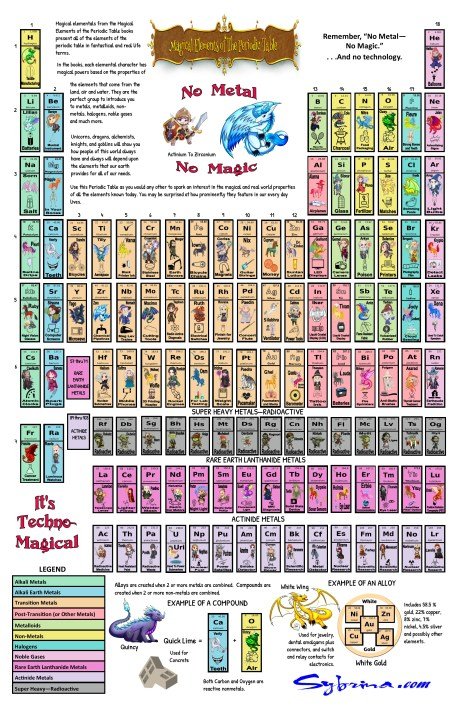
Inter-Active Elemental Fantasy-Themed Periodic Table from Magical Elements of the Periodic Table Presented Alphabetically by The Elemental Dragon Clan
Click here to use This Inter-Active Viewer To Learn More About The Elements Each Elemental Represents On This Periodic Table. Want this in a 24″ x 36″ Poster? Click here.
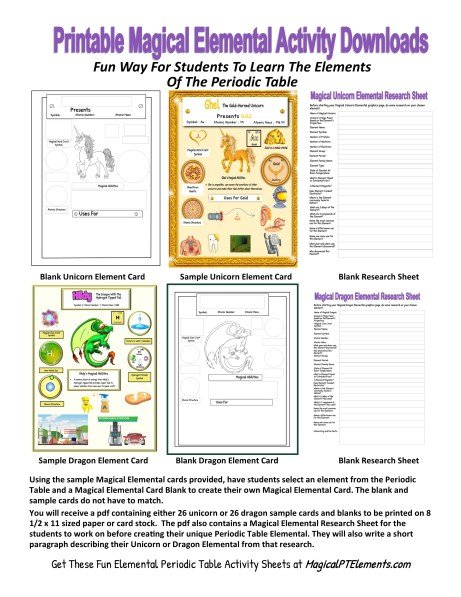
Sybrina Publishing Offers Fun Activities Based On The Book
Magical Elements of the Periodic Table Magical Elementals
Browse Magical Elemental Activities at MagicalPTElements or Sybrina-Publishing on TPT or Classful
Want To Hear The No Metal No Magic Song?
Watch the Magical Elements Presented By The Alchemical Wizards Video